Banking on Nothing: The Quiet Revolution of Americans Who Stopped Trusting the System

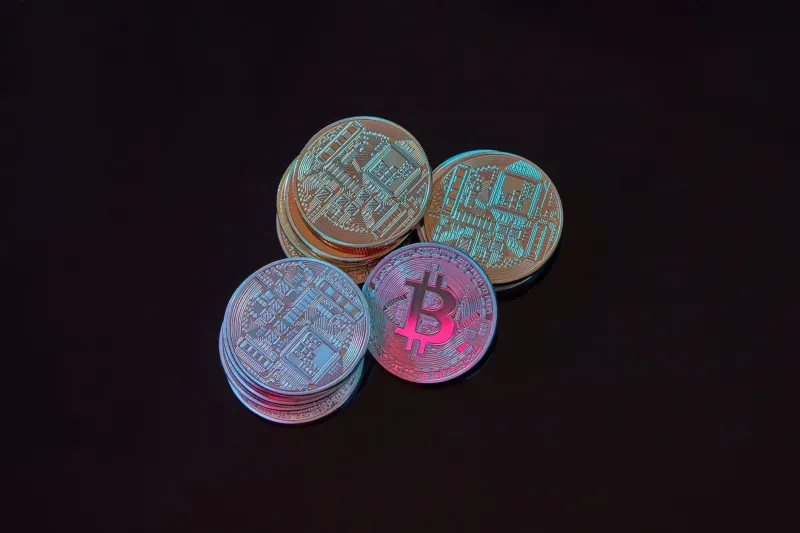
Photo by Photo by Seiya Maeda on Unsplash on Unsplash
Marcus doesn't hate banks. He just doesn't trust them anymore.
A 34-year-old electrician from Tulsa, Oklahoma, Marcus watched his father's savings account get frozen during a messy divorce proceeding in 2019. The money wasn't disputed. The account wasn't part of any claim. A clerical error at a mid-sized regional bank simply... locked him out. For eleven days, his dad couldn't pay rent.
"That was it for me," Marcus says. "I realized the money in a bank isn't really yours. It's theirs, and they'll let you have it when they feel like it."
Today, Marcus keeps about 40% of his liquid savings in Bitcoin and USDC, spread across a hardware wallet and a self-custodied software wallet. He's not a maximalist. He's not day-trading. He's not trying to retire at 35. He's building a backup system — and he's far from alone.
From Speculation to Insurance
The popular image of the crypto investor is still the guy in the Lambo hoodie, refreshing price charts at 3 a.m. and tweeting about going to the moon. That character exists, sure. But quietly, a different kind of participant has been accumulating — one whose primary motivation isn't wealth creation. It's resilience.
Call them financial preppers. Call them the unbanked-by-choice. Whatever the label, their numbers are climbing, and their reasons are getting harder to dismiss.
A 2023 survey by the Federal Reserve found that roughly 6% of American adults are "unbanked" — meaning they have no checking or savings account. Another 14% are "underbanked," relying on alternative financial services. Those numbers are striking on their own. But they don't capture the new category emerging alongside them: people who have bank accounts, use them for basic transactions, and actively route money away from them as fast as possible.
These aren't people who distrust crypto. They're people who distrust everything — and have decided that a system without a single point of failure is worth the volatility premium.
The Psychological Shift Nobody Predicted
The mental model changed somewhere between 2020 and 2023, and the timing wasn't accidental.
COVID-era stimulus chaos, bank failures like Silicon Valley Bank in March 2023, inflation that outpaced savings account yields for years running — each event chipped away at the assumption that traditional finance is the stable, boring, safe option. For a lot of Americans, the revelation wasn't that crypto was less risky. It was that the risk in traditional banking had always been there, just better hidden.
"People used to ask me why I kept money in Bitcoin when it's so volatile," says Dani, a 29-year-old freelance graphic designer in Austin who asked us to use only her first name. "Now I ask them why they keep money in a system where the bank can freeze your account, your card can get flagged by an algorithm, and inflation eats 6% of your savings every year. At least with crypto, I know what I signed up for."
Dani keeps a self-custody wallet with roughly three months of living expenses in stablecoins. She thinks of it as a fire extinguisher — something she hopes she never needs but refuses to live without.
What Mainstream Finance Won't Admit
Here's the part that makes financial advisors uncomfortable: the people building these parallel systems aren't wrong about the fragility they're reacting to.
The U.S. banking system runs on fractional reserve lending, meaning the money you deposit isn't sitting in a vault. It's been lent out. FDIC insurance covers up to $250,000 per account — a number that sounds generous until you realize it's backstopped by a fund that, at various points, has covered less than 1% of total insured deposits. The system works because everyone believes it works. That's not conspiracy theory. That's literally how it's designed.
Crypto doesn't solve all of those problems. It introduces a completely different set of problems — smart contract bugs, seed phrase loss, exchange insolvency, regulatory uncertainty. Anyone telling you self-custody is risk-free is selling something.
But the point these financial rebels are making isn't "crypto is safe." It's "concentrated risk in any single system is dangerous, and diversifying away from traditional finance is a legitimate hedge."
That's a sober, reasonable argument. The fact that it's coming from people with Bitcoin tattoos doesn't make it less true.
Building the Parallel Stack
So what does the practical infrastructure of a parallel financial life actually look like in 2024?
For most people in this movement, it's layered. A checking account at a credit union for bills and direct deposit. A small emergency fund in a high-yield savings account. And then a self-custodied crypto stack — typically a mix of Bitcoin for long-term store of value, a stablecoin layer for spending flexibility, and sometimes a small allocation to higher-risk assets.
Hardware wallets are non-negotiable for the serious ones. Ledger, Trezor, Coldcard — the brand matters less than the principle: your keys, your coins, no counterparty risk. Many are also experimenting with multi-signature wallet setups, where transactions require sign-off from multiple devices, eliminating single points of failure.
Some go further. Peer-to-peer Bitcoin trading through platforms like Bisq. Lightning Network wallets for small everyday transactions. Physical gold alongside digital assets, because the philosophy here isn't crypto maximalism — it's anti-fragility maximalism.
The System That Refuses to Take the Hint
What's remarkable is how thoroughly mainstream finance has failed to engage with any of this in good faith.
The standard response from financial advisors is to treat crypto allocation like a gambling problem — something to be minimized, managed, and ideally eliminated from a "responsible" portfolio. The standard response from regulators is to focus on compliance and taxation, treating the entire space as a revenue problem rather than a signal that something is wrong with the existing infrastructure.
Neither response addresses the actual concern: that millions of Americans no longer believe the traditional system will be there for them when they need it most.
Marcus, the electrician from Tulsa, put it plainly: "I'm not trying to get rich. I'm trying to make sure I never get locked out again. If that makes me a rebel, fine. I'll take it."
The great unbanking isn't a revolution with a manifesto. It's quieter than that — one hardware wallet, one seed phrase, one person at a time, building exits from a system that never bothered to ask if they were okay inside it.