Cash Was King, Crypto Is the New Off Switch: How Americans Are Hiding Their Money from the Machine
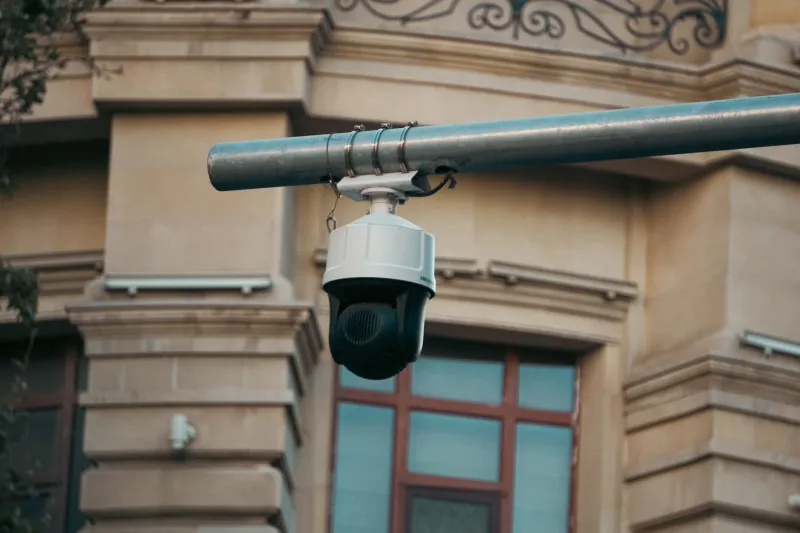
There was a time when handing someone a twenty-dollar bill was a completely unremarkable act. No record. No timestamp. No algorithm flagging it as suspicious because you bought gas in a different zip code than usual. That time is gone. The architecture of modern financial surveillance is so total, so deeply embedded in the infrastructure of everyday life, that most people don't even notice it anymore. They've confused convenience with consent.
Crypto noticed. And now the cat-and-mouse game is getting very, very interesting.
The Panopticon Didn't Announce Itself
Jeremy Bentham's panopticon was a prison designed so that inmates could never know when they were being watched—so they'd behave as if they always were. Swap "inmates" for "account holders" and you've got a pretty accurate description of the modern American banking system.
Your bank files a Suspicious Activity Report if you make too many cash deposits. Your payment apps are legally required to report transactions over certain thresholds to the IRS. Financial institutions share data with federal agencies under frameworks most people have never read. And thanks to the Bank Secrecy Act—a law that sounds quaint in 2024—your financial institution is essentially deputized as a surveillance partner for the federal government.
None of this is secret. It's just buried in terms of service that nobody reads.
The result is a financial system where your grocery purchases, your political donations, your medical expenses, and your bar tabs are all quietly indexed, cross-referenced, and potentially flagged. Not because you're a criminal. Just because the infrastructure exists to do it, and once infrastructure exists, it gets used.
Enter the Privacy Seekers
Here's what the mainstream narrative gets wrong about people who use privacy coins and mixing protocols: it treats them like they're hiding something shameful. The reality is more complicated and, frankly, more sympathetic.
Talk to people in online communities dedicated to financial privacy and you'll hear the same stories over and over. A freelance graphic designer in Austin who got her PayPal account frozen for six weeks after a client dispute—no warning, no recourse, just a locked account and rent due. A small business owner in Ohio who had a bank account closed after he started accepting payments from a cannabis dispensary operating legally under state law. A domestic abuse survivor in Washington state who needed to move money without her abuser—who worked at her bank—being able to track it.
These aren't edge cases. They're the predictable consequences of a surveillance infrastructure that was built without much thought for who it might harm.
Privacy coins like Monero use cryptographic techniques—ring signatures, stealth addresses, confidential transactions—to obscure who sent what to whom. Mixing protocols on Ethereum-based networks do something similar: they pool transactions together so that the trail of any single payment becomes statistically murky. These tools were built by cypherpunks who understood, before most people did, that financial privacy and personal freedom are not separable concepts.
The Regulatory Hammer Is Already Swinging
Of course, regulators aren't sitting still. The Treasury Department's Office of Foreign Assets Control sanctioned Tornado Cash in 2022—a landmark moment because it wasn't just sanctioning a person or a company, it was sanctioning open-source code. The legal battles that followed were messy and ongoing, with courts wrestling with questions about whether software can be sanctioned the way a human actor can.
FinCEN has been pushing for stricter Know Your Customer requirements on crypto transactions for years. The IRS has dedicated more resources to blockchain analytics. Companies like Chainalysis have built entire businesses around de-anonymizing crypto transactions for government clients.
The tools are getting better on both sides. Blockchain analytics firms can now trace transactions through multiple mixing rounds with increasing accuracy. And privacy coin developers respond by making their protocols more sophisticated. It's an arms race, and it's accelerating.
What's interesting is who gets caught in the crossfire. When Tornado Cash was sanctioned, it didn't just affect bad actors. It locked up funds belonging to ordinary users, including some who had used it for entirely legitimate reasons—like people in countries with authoritarian financial systems trying to move their own money.
The Uncomfortable Middle Ground
Here's the part that doesn't fit neatly into either the "crypto is for criminals" narrative or the "financial freedom for all" counter-narrative: most of this is genuinely complicated.
Governments have legitimate interests in preventing money laundering, tax evasion, and terrorist financing. These aren't invented concerns. The financial system has been used to fund genuinely terrible things, and the tools built to stop that have real value.
But the same tools that catch bad actors create a surveillance apparatus that has historically been turned on civil rights activists, journalists, political dissidents, and anyone else who inconveniences the powerful. The Church Committee revelations of the 1970s showed how thoroughly American intelligence agencies abused financial surveillance. The assumption that today's infrastructure will only ever be used responsibly requires a level of institutional trust that history doesn't support.
Privacy isn't inherently suspicious. It's a design feature of a free society. The fact that we've had to rebuild it in code, from scratch, because the analog version was quietly dismantled—that's the real story here.
What Ordinary People Are Actually Doing
In practice, the Americans turning to privacy-preserving crypto tools aren't running elaborate schemes. They're doing things like:
- Using Monero for purchases they'd rather not have associated with their identity—not because those purchases are illegal, but because they're private
- Running transactions through mixers before donating to political causes in an environment where financial data can be subpoenaed
- Keeping a portion of savings in privacy coins as a hedge against the kind of account freezes that have become disturbingly common
- Using decentralized exchanges specifically to avoid the KYC requirements that centralized platforms impose
None of this is invisible to regulators. But the sheer volume of it is becoming impossible to fully surveil, which is exactly the point.
The Long Game
Regulators will keep tightening the screws. Privacy coin developers will keep finding new approaches. Courts will keep wrestling with questions that existing law wasn't designed to answer. And ordinary people will keep making individual decisions about how much of their financial life they're willing to hand over to systems they didn't consent to and can't meaningfully opt out of.
The surveillance state didn't ask permission. It just built the infrastructure and waited for everyone to get used to it. The crypto response isn't asking permission either. It's just building something different and letting people choose.
That's not a crime. That's a design philosophy. And it's one that's a lot older than Bitcoin.