Cold Storage or Bust: The Self-Custody Revolution Nobody on Wall Street Saw Coming
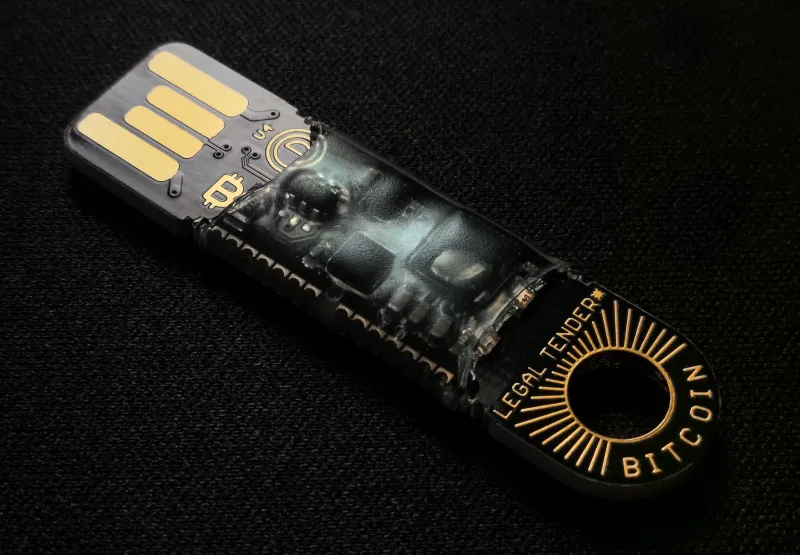
For years, the self-custody crowd was easy to dismiss. They were the people at Bitcoin meetups with laminated seed phrases sewn into their jacket linings, ranting about counterparty risk while everyone else was busy refreshing their Coinbase portfolios. Fringe energy. True-believer stuff.
Then FTX imploded. Then Celsius. Then Voyager. Then a handful of crypto-adjacent banks started folding like lawn chairs in a hurricane. And suddenly, the fringe crowd wasn't looking so fringe anymore.
The numbers back this up. On-chain data has tracked consistent spikes in Bitcoin outflows from major centralized exchanges over the past eighteen months—billions of dollars worth of BTC moving off platforms and into wallets that only their owners control. The trend isn't a blip. It's a structural shift, and it's pulling in people who, not long ago, thought a hardware wallet was something you bought at Home Depot.
What Finally Broke the Spell
Let's be honest: most people don't change how they store their money until something scary happens. The psychology here isn't complicated. Inertia is powerful. Centralized exchanges are convenient, they have customer support lines, and they feel vaguely official—like a real bank, sort of. That comfort was enough for millions of Americans to leave serious money sitting on platforms they didn't fully understand.
The collapses changed the math. When FTX went down, it didn't just vaporize Sam Bankman-Fried's credibility—it vaporized the savings of real people who had trusted a platform that looked, from the outside, like a legitimate institution. Celebrities endorsed it. Super Bowl ads ran for it. Regulators seemed okay with it. And then it was gone.
The psychological impact of that cannot be overstated. It's one thing to read about exchange risk in a white paper. It's another to watch your neighbor lose $40,000 because a company was secretly gambling with customer funds. That's the kind of lesson that sticks.
Bitcoin maximalists—who had been preaching self-custody since roughly the Satoshi era—didn't even have to say "I told you so." The market said it for them.
The Tools Have Finally Caught Up
Here's something the mainstream financial press tends to gloss over: self-custody used to be genuinely hard. Not impossible, but hard enough that a reasonable person could look at the process and decide the risk of screwing it up outweighed the risk of leaving coins on an exchange.
Setting up a hardware wallet five years ago meant navigating clunky interfaces, hand-writing 24-word seed phrases onto paper that could burn in a house fire, and hoping you never fat-fingered a transaction to the wrong address. One mistake and your funds were gone—no customer service, no dispute process, no recourse. The unforgiving nature of self-custody was both its greatest strength and its biggest barrier to adoption.
That barrier has dropped significantly. Ledger, Trezor, and newer entrants like Coldcard have dramatically improved their user experiences. Multisig setups—where multiple keys are required to authorize a transaction—have become more accessible through services like Casa and Unchained, which let people hold serious money without betting everything on a single point of failure. Seed phrase backup solutions have evolved beyond paper, with metal storage options that survive fires, floods, and most apocalyptic scenarios short of a direct meteor strike.
For the first time, the tools available to an ordinary American with a few thousand dollars in Bitcoin are genuinely comparable—in terms of usability—to what institutional players have been using for years. That democratization matters.
The Psychological Barriers That Still Exist
None of this means self-custody is frictionless. There are real psychological hurdles that keep people from making the move, and pretending otherwise doesn't help anyone.
The biggest one is fear of self. People don't trust themselves to not lose a seed phrase, to not forget a PIN, to not send funds to a dead address. This isn't irrational. Human error is the number one cause of self-custody losses, and that's a fact worth sitting with. The solution isn't to avoid self-custody—it's to build redundancy into your setup from day one. Multiple secure backups. Clear documentation stored separately from the device itself. A trusted person who knows how to access your estate if something happens to you.
The second barrier is complexity paralysis. There are dozens of wallet options, competing standards, different approaches to key management, and enough forum arguments about the "right" way to do things to make anyone's head spin. The punk move here is to ignore the maximalism within the maximalism and just start somewhere reasonable. A basic hardware wallet with a properly stored seed phrase is infinitely better than leaving everything on an exchange.
The third barrier is the creeping suspicion that self-custody is only for people with serious money. It's not. The fee structures on most hardware wallets have come down. The learning curve, while real, flattens quickly. And the argument that "I don't have enough to worry about" gets harder to make when you consider that exchanges can freeze withdrawals at any time, for any reason, with no obligation to explain themselves.
Why 2024 Feels Different
Every year, someone declares this the year of self-custody. But there are actual structural reasons to think the current moment has more staying power than previous cycles.
Regulatory pressure on centralized exchanges is intensifying. The SEC's ongoing battles with major platforms have made it genuinely unclear which services will be operating in their current form a year from now. That uncertainty is a forcing function. When you're not sure whether your exchange will survive a regulatory crackdown, the calculus around convenience shifts.
At the same time, the institutional money that flooded into crypto over the past few years has brought with it a more sophisticated approach to custody. Institutions don't leave assets on exchanges—they use qualified custodians or manage their own keys. As that institutional culture bleeds into the retail conversation, the norm around where you hold your coins is quietly shifting.
And then there's the generational angle. The younger cohort of crypto participants—people who grew up distrusting banks after watching 2008 happen to their parents—are more philosophically aligned with self-custody than any previous wave of retail investors. For them, "not your keys, not your coins" isn't a slogan. It's a baseline assumption.
The Actual Move
If you've been putting this off, the message from the market is pretty clear: stop waiting for a perfect moment. There isn't one. Get a hardware wallet from a reputable manufacturer. Buy it directly from the source, not a third-party reseller. Set it up carefully, back up your seed phrase in at least two physically separate locations, and move your long-term holdings off whatever exchange is currently holding them hostage.
The exchanges aren't going away. They're still useful for trading, for on-ramps and off-ramps, for liquidity. But they were never supposed to be vaults. That's not what they were built for, and the wreckage of the past few years is proof enough.
The punk ethos has always been about refusing to hand control of your life to institutions that don't have your interests at heart. In crypto, that principle has a very specific, very practical application. Your keys. Your coins. No exceptions.