Dead Wallets Don't Talk: The Silent Fortune Crisis Swallowing Crypto Estates
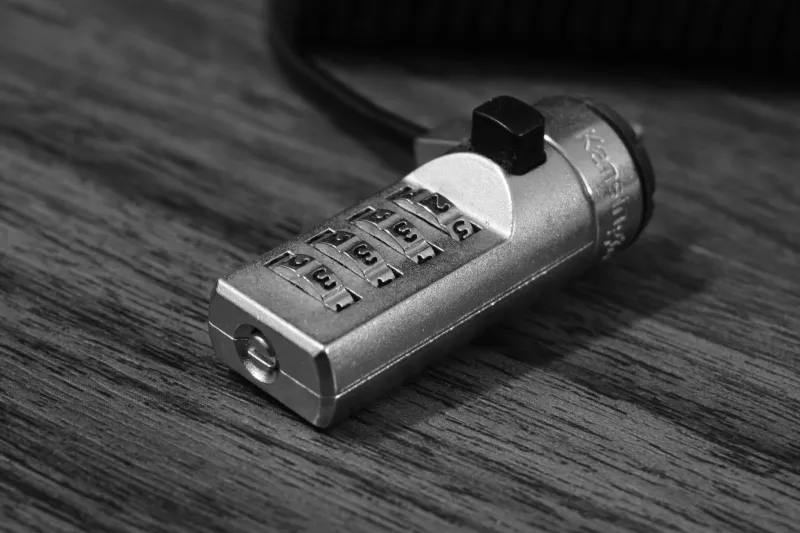
Somewhere in a storage unit in suburban Ohio, there's a Ledger Nano S sitting in a shoebox. The man who owned it passed away last spring. He had roughly $340,000 in Bitcoin on it, according to his Coinbase history — the only account his family could actually access. The hardware wallet itself? His daughter has been staring at it for six months. No PIN. No seed phrase. No instructions. Just a small black rectangle that might as well be a locked vault at the bottom of the ocean.
This isn't a rare story anymore. It's becoming one of the defining financial tragedies of the crypto generation.
The Self-Custody Paradox
The whole ethos of holding your own keys was built on distrust — of banks, of exchanges, of intermediaries who could freeze your account on a regulator's whim. And that instinct isn't wrong. But the same iron wall that keeps the government out also keeps your spouse, your kids, and your estate attorney out when you're gone.
"We're seeing this constantly now," says Marcus Webb, an estate planning attorney based in Austin who's started specializing in digital asset succession. "Someone passes away and their family knows they had crypto. They can see the transaction history on-chain. They know the money is there. But without the seed phrase or the private key, it's functionally inaccessible. It's like watching a treasure chest at the bottom of a glass-floored lake."
The numbers are staggering. Chainalysis estimated that somewhere between 17% and 23% of all existing Bitcoin — potentially millions of coins — may already be permanently lost. A significant chunk of that is attributed to early adopters who died before the concept of digital asset estate planning even existed. But the problem isn't fading with time. It's accelerating, as more Americans hold meaningful wealth in self-custodied wallets with zero succession infrastructure around them.
Grieving and Locked Out
For families, the experience is a specific kind of cruel. You're grieving. You're dealing with probate court, funeral arrangements, family dynamics. And somewhere in the middle of all that, you're also trying to figure out whether your loved one wrote a 12-word seed phrase on a Post-it note that got thrown away, or tattooed it on the inside of a notebook, or stored it in a password manager that no one has the master password to.
Janice Morales, a Colorado woman whose husband died unexpectedly at 44, spent nearly a year trying to access his wallets. "He was so private about it. He thought he was protecting us by not telling us details," she says. "But he just made it impossible. We hired a data recovery firm. We hired a crypto forensics consultant. We found three hardware wallets. We got into exactly zero of them."
The legal system offers almost no relief. Unlike a traditional bank account — where a death certificate and letters testamentary can unlock access — crypto wallets operate outside the financial infrastructure that probate law was built around. Courts can order the disclosure of seed phrases from an estate, but if the deceased never wrote them down, there's nothing to compel. The coins just sit there. Forever.
Building a Better Dead Man's Switch
A small but growing industry is trying to solve this. Companies like Casa, Unchained, and a handful of newer entrants are pitching multi-signature custody solutions designed explicitly with inheritance in mind. The idea is straightforward: instead of a single point of failure (one seed phrase, one hardware wallet), assets are protected by a multi-sig setup where a trusted third party holds one key, the owner holds another, and a designated heir or attorney holds a third. No single party can move the funds unilaterally — but death doesn't mean permanent lockout either.
"The 'not your keys, not your coins' crowd sometimes treats any third-party involvement like a betrayal of the faith," says one product lead at a custody firm who asked not to be named. "But there's a difference between surrendering custody to an exchange and using a structured key-sharing arrangement that still keeps you in control while you're alive. The goal is resilience, not dependence."
Other approaches are more DIY. Some holders are using encrypted documents stored with attorneys, fireproof safes with notarized instructions, or even splitting seed phrases across multiple trusted family members using Shamir's Secret Sharing — a cryptographic method that divides a secret into parts, requiring a threshold of holders to reconstruct it.
The Legal Gray Zone
Even when families do manage to access a deceased holder's wallets, they enter murky legal territory fast. Does the estate owe capital gains taxes on unrealized appreciation? Who has legal standing to move the assets before probate closes? What happens when the wallet contains assets across multiple chains, some of which may have tax or regulatory complications?
"Most estate attorneys are still learning on the fly," Webb admits. "The law hasn't caught up. We're advising clients using frameworks built for brokerage accounts and applying them to assets that don't behave anything like brokerage accounts. It's imperfect."
Some states are moving faster than others. Wyoming has passed legislation explicitly recognizing digital assets in estate law. Florida and Colorado have made moves to clarify the fiduciary duties of personal representatives dealing with crypto. But nationally, it's still a patchwork.
Write It Down. Seriously.
The uncomfortable punchline here is that the solution, for most people, isn't a sophisticated multi-sig vault or a $5,000 retainer with a crypto-specialized attorney. It's a piece of paper. A documented succession plan — seed phrases stored securely, hardware wallet locations noted, instructions written clearly — would prevent the vast majority of these losses.
But the culture around crypto has historically treated that kind of documentation as a security risk. Write it down and someone might find it. Tell your family and they might get targeted. The paranoia that makes self-custody powerful is the same paranoia that makes inheritance planning feel dangerous.
The reality is that the threat model needs to evolve. For most people, the risk of their family being locked out of their estate is far more probable than a targeted home invasion to steal a seed phrase. The punk ethos was never about burning your wealth on principle. It was about control. Real control means planning for the moment when you're no longer here to exercise it.
That shoebox in Ohio isn't a monument to financial sovereignty. It's a $340,000 lesson in what happens when the revolution doesn't leave a note.