Three Chords and a Smart Contract: The Punk Spirit That's Rewriting the Rules of Crypto Governance
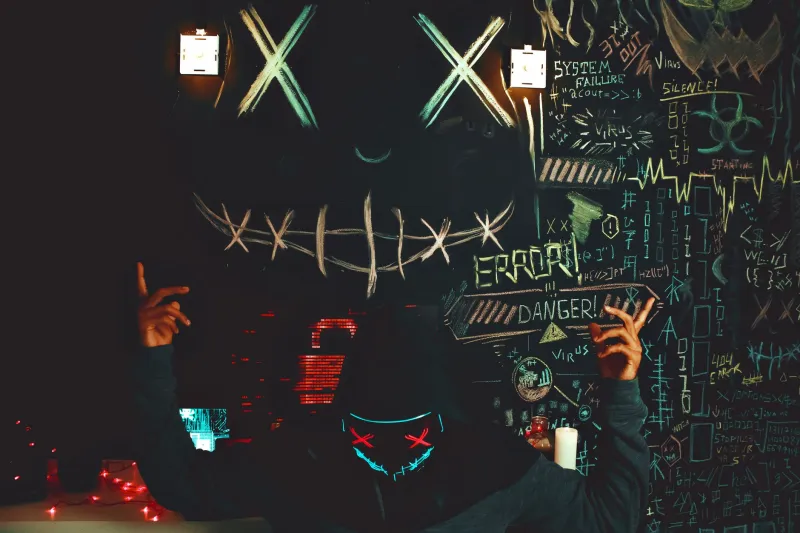
In 1977, the Sex Pistols told the music industry to go to hell. They couldn't play their instruments particularly well. They had no business plan. They had no corporate backing, no radio consultants, no focus-grouped image strategy. What they had was a point of view, a cheap recording setup, and an absolute refusal to ask permission.
Forty-something years later, a group of pseudonymous developers deployed a governance contract on Ethereum, minted voting tokens, and handed control of a multi-million dollar protocol to its community. No board of directors. No CEO. No headquarters. Just code, consensus, and a shared belief that the old way of running things was broken.
If you don't see the connection, look closer.
The Gatekeepers Always Lose (Eventually)
Punk emerged as a direct response to bloat. By the mid-seventies, rock had become a cathedral — massive stadium tours, overproduced albums, record label executives deciding who got heard and who got shelved. The barriers to entry were enormous. You needed the industry's blessing to exist.
Punk's answer was to make the barrier irrelevant. Four-track recorders. Self-pressed 7-inch singles sold at shows. Zines photocopied at Kinko's and distributed by hand. The infrastructure of exclusion was bypassed entirely, not defeated in a frontal assault but simply rendered unnecessary.
This is precisely what blockchain does to financial infrastructure. You don't beat the bank — you build something that makes the bank optional. You don't reform the VC system — you create token-based funding mechanisms that route around it. The strategy is identical. The medium is different.
Traditional finance, like the music industry of 1976, is built on gatekeeping. You need a bank account to participate in the economy. You need a broker to access certain markets. You need accredited investor status to touch entire categories of assets. Crypto, at its most ideologically coherent, is the three-chord answer to all of that: here's a wallet address, here's the protocol, figure it out.
DAOs Are Playing the Same Set List
Decentralized autonomous organizations get a lot of press for their chaos — the governance drama, the contentious votes, the occasional treasury exploit. What gets less attention is what they represent structurally: the most serious attempt since the commune movement to build organizations that don't concentrate power at the top.
Consider how a DAO like MakerDAO actually functions. The protocol that governs DAI, one of the most widely used stablecoins in crypto, is controlled by MKR token holders who vote on everything from interest rate parameters to collateral types to the salaries of contributors. There's no CEO who can unilaterally decide to change the product direction. There's no board that can quietly approve a sweetheart deal. Every significant decision is on-chain, transparent, and subject to community override.
Is it messy? Absolutely. Voter turnout is often low. Wealthy token holders can swing votes. Governance attacks are a real threat. But here's the thing — punk was messy too. The early hardcore scene was full of infighting, bad actors, and ideological fractures. That didn't invalidate the underlying project of building something outside the mainstream's permission structure.
Nouns DAO takes the experiment even further. Every 24 hours, a new Noun NFT is auctioned. The proceeds go to the Noun DAO treasury. Holders vote on how to deploy those funds — and they've funded everything from short films to public art installations to protocol development. It's a self-sustaining creative and financial organism with no central authority, operating on vibes, voting, and Ethereum.
That's a zine with a treasury.
The Projects That Wear It on Their Sleeve
Some corners of crypto aren't just philosophically aligned with punk — they're aesthetically committed to it.
Punk-inspired NFT projects have been part of the space since CryptoPunks launched in 2017 and essentially invented the concept of digital collectible culture. The 10,000 pixelated characters — many sporting mohawks, leather jackets, and expressions of maximum contempt — became the founding artifacts of an entire cultural movement. Their influence on everything from profile picture culture to digital identity is hard to overstate.
Beyond aesthetics, there are projects explicitly building governance systems around anti-hierarchical principles. Gitcoin's quadratic funding mechanism, for instance, is designed to counteract the influence of large donors by amplifying the collective signal of small contributors. It's a governance hack that specifically nerfs whales — a structural punk move if there ever was one.
Farcaster, the decentralized social protocol, is building communication infrastructure that users own and control, with no algorithmic feed dictated by a platform chasing engagement metrics. It's the Dischord Records model applied to social media: build the infrastructure yourself, keep it community-controlled, don't sell out.
The Philosophy Isn't Optional
Here's where I'll plant a flag: you cannot fully separate crypto's mission from its countercultural roots without losing something essential.
When crypto gets co-opted by the same financial institutions it was designed to challenge — when BlackRock files for a Bitcoin ETF, when banks start offering "blockchain services," when the language of decentralization gets used to market products that are fundamentally centralized — the punk in the room should be asking uncomfortable questions.
That's not a reflexive rejection of institutional adoption. Broader access to crypto has real benefits. But adoption without philosophy is just another product. And products can be controlled, regulated, captured, and ultimately defanged.
The original punk bands didn't hate music. They hated what the music industry had done to it. The original cypherpunks didn't hate money. They hated what centralized financial systems had done to it — the surveillance, the exclusion, the extraction, the dependence.
Governance in crypto, at its best, is the attempt to encode those values into infrastructure that can't be talked out of them. A smart contract doesn't care if Goldman Sachs wants a seat at the table. The code runs the same for everyone.
The DIY Ethos as Competitive Advantage
There's a practical argument here too, beyond the ideological one.
Centralized systems are efficient right up until they catastrophically fail. Distributed, community-governed systems are inefficient right up until they demonstrate resilience that centralized systems can't match. The punk scene didn't build a global independent music infrastructure because it was the easy path — it built one because the mainstream path required compromises that changed the thing you were trying to protect.
DAOs and decentralized protocols are harder to use, harder to govern, and harder to explain than their centralized alternatives. They're also harder to shut down, harder to corrupt, and harder to capture. That's the trade-off. It's the same trade-off a band makes when they press their own records instead of signing to a major.
Three chords. A smart contract. A refusal to ask permission.
The set list hasn't changed that much.