Dog Money Doesn't Lie: Why Memecoins Are the Most Honest Bet in Crypto
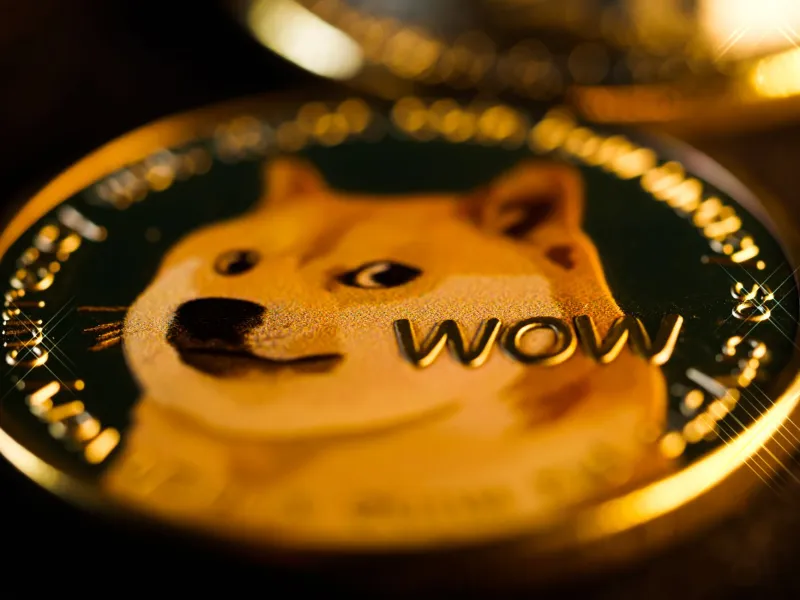
Somewhere between Dogecoin hitting a market cap in the tens of billions and whatever Pepe-adjacent token launched this morning, the crypto establishment had a quiet breakdown. The people who spent years building elaborate tokenomics models, recruiting Stanford economists as advisors, and writing whitepapers dense enough to use as doorstops watched retail investors pour money into coins that were, by design, completely upfront about meaning nothing.
And here's the thing nobody in a suit wants to admit: those retail investors might have been onto something.
The Whitepaper Was Always a Performance
Let's back up. Crypto's origin story is steeped in the romance of serious, world-changing technology. Bitcoin was going to replace central banks. Ethereum was going to rebuild the internet. Every project that followed had to dress the part — professional decks, advisory boards, vague promises about disrupting trillion-dollar industries, and roadmaps that stretched conveniently beyond any reasonable accountability window.
The whitepaper became crypto's version of a business casual dress code. It didn't necessarily mean anything was real. It just meant you'd done the cosplay correctly. And sophisticated-sounding language turned out to be an excellent cover for some of the most spectacular frauds in financial history — projects with institutional backing, credentialed teams, and beautifully designed websites that eventually drained wallets and disappeared.
Memecoins walked in wearing a Halloween costume and announced exactly what they were.
There's no roadmap promising decentralized finance for the unbanked when your mascot is a dog making a surprised face. There's no pretense of utility. The value proposition of a memecoin is brutally simple: a community of people decided this thing was worth something, and either enough other people agree or they don't. That's it. That's the whole pitch.
Pure Consensus, Zero Noise
What memecoins accidentally built is the cleanest market mechanism in the blockchain space. Price isn't being propped up by venture capital lockups or manipulated by insider token allocations dressed up as "ecosystem development funds." There's no team wallet quietly dumping on retail every time the chart gets exciting.
Obviously, that's not universally true — plenty of memecoin launches are straight-up rugs wearing a meme as a mask. But the ones that survive past the first 48 hours do so entirely on community momentum. No institutional floor. No market makers with contractual obligations to maintain price bands. Just people deciding, collectively, whether a thing has cultural value.
That's closer to how free markets are supposed to work than most "serious" crypto projects ever get.
When Dogecoin pumped in 2021, it wasn't because of a protocol upgrade or a partnership announcement. It was because enough people — many of them first-time investors who'd never touched a brokerage account — decided collectively that the joke coin had meaning. That's not irrational. That's community consensus operating in real time, visible to everyone, with no hidden variables.
Why Retail Trusts the Dog Logo
Ask a retail investor why they bought a memecoin over some layer-2 scaling solution with a $50 million raise, and you'll get answers that sound like jokes until you think about them for a second.
"I know what I'm getting into."
That sentence is doing a lot of work. It means: I understand this is speculative, the community energy is real, and nobody is pretending this is going to revolutionize supply chain management. The risk is legible. Compare that to buying into a project where you'd need a PhD to understand whether the tokenomics are designed to eventually extract value from you — and where the team's credibility is doing all the trust-building work while the actual mechanics stay opaque.
The crypto space has burned retail investors so many times with projects that looked serious. Celsius looked serious. FTX looked extremely serious. Three Arrows Capital was quoting ancient philosophy in interviews while leveraging themselves into oblivion. The aesthetic of legitimacy turned out to be a vector for fraud.
A coin called $BONK doesn't have that problem. The branding is the disclosure.
Authentic Decentralization Looks Ridiculous on Purpose
Here's where it gets philosophically interesting. One of Bitcoin's foundational ideas is that trust should be distributed — that no single authority should control the narrative or the money supply. Decentralization isn't just a technical feature; it's a value system.
Most "serious" crypto projects centralize trust in teams, advisors, and investors even while claiming to build decentralized infrastructure. The community is an afterthought, consulted via governance tokens that the team controls enough of to override anyway.
Memecoins invert this completely. The community isn't a feature of the project — the community is the project. There's nothing underneath the collective belief except the blockchain itself. That's not a bug in the design. For a certain definition of decentralization, it's the purest implementation of the idea that's ever existed in this space.
The punk in that is hard to miss. It's a giant middle finger to the venture-backed model of "decentralization" where a16z holds enough tokens to determine the outcome of any vote that matters.
The Honest Gamble vs. The Dishonest Promise
None of this means memecoins are good investments. Most of them go to zero, which is exactly what you'd expect from assets whose value is entirely sentiment-driven. The volatility is violent and the liquidity can evaporate faster than you can hit the sell button.
But there's a meaningful difference between losing money on something that told you it was a gamble and losing money on something that promised to change the world and just... didn't. One of those outcomes involves deception. The other is just the market doing what markets do.
Retail investors have started pricing that difference in. The cynicism about "serious" crypto projects isn't irrational — it's learned behavior from years of watching credentialed teams with institutional backing take the money and leave. Against that backdrop, the memecoin's honesty about its own absurdity starts to look like a feature.
What the Rebellion Actually Means
The memecoin moment isn't just a cultural quirk or a sign that crypto has lost the plot. It's a stress test result. When enough people decide they'd rather bet on transparent community energy than opaque institutional promises, that's information about how much trust has been destroyed by projects that played the serious game and cheated.
The dog didn't win because people are stupid. The dog won because the dog didn't lie.
If the "legitimate" crypto industry wants that trust back, it's going to have to earn it the hard way — with actual transparency, real accountability, and governance structures that don't just perform decentralization while concentrating power. Until then, the meme is the message, and the message is pretty clear.
Decentralize everything. Even the joke.