No Face, No Resume, No Problem: Inside the Shadow Economy of Crypto's Pseudonymous Power Brokers
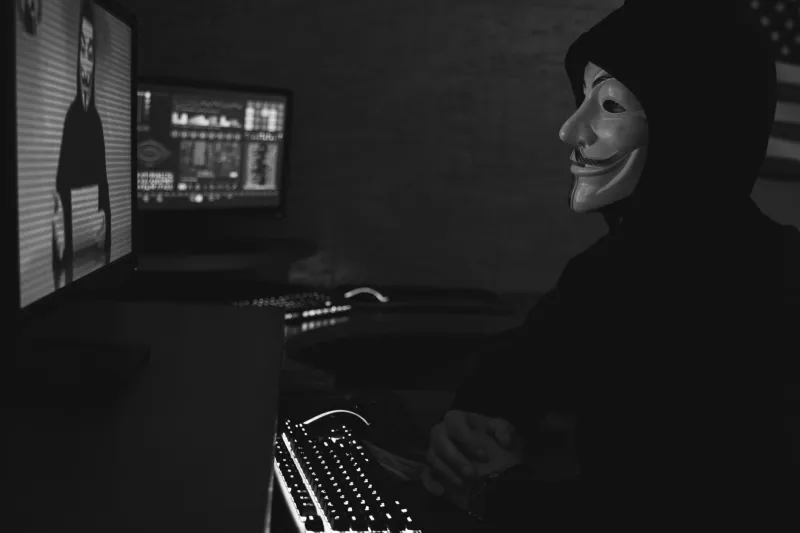
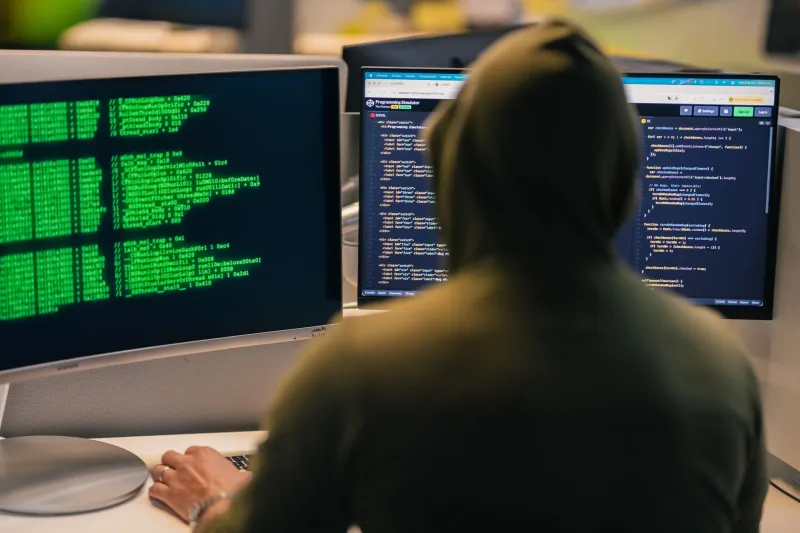
Somewhere right now, a person you will never meet is deciding the economic fate of tens of thousands of people. They go by a handle that sounds like a rejected Dungeons & Dragons character name. Their avatar is a pixelated frog or a smudged ink drawing of a samurai. Their Twitter bio is three words and an emoji. And their protocol — the one they built, shipped, and grew from a Discord server with eleven members into a multi-billion dollar DeFi machine — is quietly running the financial lives of people from Sacramento to Savannah.
Welcome to the anon aristocracy. They didn't inherit power. They coded it into existence.
Trust Without a Face
Here's the thing that breaks conventional wisdom: trust in traditional finance is built on credentials, institutions, and faces. You trust your broker because they have a Series 7 license, an office in a glass tower, and a firm handshake. You trust a CEO because there's a Wikipedia page, a Forbes profile, and a TED Talk proving they exist.
Crypto blew that model up with a single question: what if the code itself was the credential?
When an anonymous dev ships a protocol with clean, audited smart contracts — when the math works, the tokenomics hold, and the product does exactly what it says on the tin — the community doesn't care if the person behind it is a twenty-two-year-old in a studio apartment in Austin or a former hedge fund quant hiding from regulatory scrutiny. The trust lives in the contract address, not the business card.
This isn't naive. It's actually a radical rethinking of accountability. On-chain activity is permanent, transparent, and verifiable. An anon dev with a three-year track record of shipping clean code and never touching the treasury has, in a very real sense, more auditable history than a credentialed Wall Street veteran whose worst decisions are buried in NDAs and arbitration agreements.
How Reputation Gets Built from Zero
Starting from nothing — no name, no face, no institutional backing — and building genuine credibility in crypto is a grind that most people underestimate. The path is surprisingly consistent among the pseudonymous builders who've made it.
It starts with showing up. Consistently. In the right Discord servers, on Crypto Twitter, in governance forums. Not with hype, but with substance. A sharp technical thread explaining a vulnerability in a competitor's contract. A governance proposal that's actually well-researched. A GitHub commit history that speaks for itself.
From there, it compounds. The crypto community is small enough that signal travels fast. One respected dev vouches for your work in a public thread and suddenly three hundred people are reading your documentation. A protocol integrates your tool and now your handle is showing up in their announcements. You become legible to the community without ever becoming visible to the outside world.
The most successful pseudonymous builders treat their handle like a brand — because it is one. Every interaction, every deployment, every governance vote either builds or erodes that brand. There's no PR firm to spin a bad week. There's no comms team to soften a controversial take. The anon lives and dies by the unfiltered record they leave on-chain and on-feed.
The Decentralization Question Nobody Wants to Answer Honestly
Here's where it gets philosophically thorny. Does genuine decentralization actually require anonymity, or is that just a convenient rationalization?
The honest answer is: it depends, and the community rarely admits that.
Anonymity can serve decentralization by removing the single point of failure that a known founder represents. If nobody knows who built the thing, there's no individual to bribe, coerce, subpoena, or cancel. The SEC can't show up at a door that doesn't exist in their database. A venture firm can't quietly pressure a named founder to compromise on tokenomics. The protocol becomes more genuinely leaderless because the leader is, for all practical purposes, a ghost.
But anonymity can also be a shield for something uglier. It can protect a dev who plans to exit with the treasury. It can insulate a team from accountability when the product fails and users get hurt. The same fog that protects a principled builder from regulatory overreach also protects a grifter from consequences. The technology doesn't distinguish between the two. The community has to.
The brutal truth is that anonymity is a tool, not a virtue. What matters is what the tool is being used for — and that requires the community to stay skeptical, read the on-chain data, and never confuse a good avatar with a good actor.
When the Mask Comes Off
Doxxing — whether voluntary or forced — tends to be one of the most destabilizing events in a pseudonymous project's lifecycle. The community's reaction is almost never neutral.
Sometimes the reveal is a net positive. The person behind the handle turns out to be a credentialed researcher or a seasoned engineer with a clean history, and the community breathes a collective sigh of relief. Trust that was always implicitly there gets explicit confirmation. The protocol matures. Institutional capital that was sitting on the sidelines because of regulatory uncertainty starts moving.
Other times, the reveal is catastrophic. The person behind the handle has baggage — a previous failed project, a legal history, affiliations that the community would have rejected if they'd known upfront. The token dumps. The Discord fractures. The governance forum turns into a war zone. Projects have died in the forty-eight hours after an unwanted doxxing because the community's entire trust architecture was built on the anonymity itself, not on the underlying fundamentals.
The most interesting cases are the ones where the revealed identity is... completely unremarkable. An ordinary person with no particular red flags and no particular prestige. And somehow, that's the most disorienting outcome of all — because it forces the community to confront the fact that they were never trusting a persona. They were trusting a system. The anon was always just the person maintaining it.
The Punk Parallel
There's something deeply familiar about all of this if you squint at it through a cultural lens. The most influential figures in punk music were often deliberately obscure — not because they were hiding something sinister, but because the point was never the celebrity. The point was the sound, the message, the movement. The face was a distraction from the thing that actually mattered.
Crypto's pseudonymous builders are operating in that same tradition, whether they know it or not. The handle is a way of saying: judge the work, not the worker. It's a rejection of the cult of personality that has made traditional tech culture so susceptible to fraud, hero worship, and the catastrophic collapse that follows when a celebrated founder turns out to be fallible or fraudulent.
The anon aristocracy isn't perfect. It's messy, it's occasionally exploited, and it produces its share of disasters. But it's also produced some of the most resilient, community-owned infrastructure in the history of financial technology — built by people whose names you'll never know, whose faces you'll never see, and whose code will probably outlast all of them.
That's not a bug. For a lot of us, that's the whole point.